

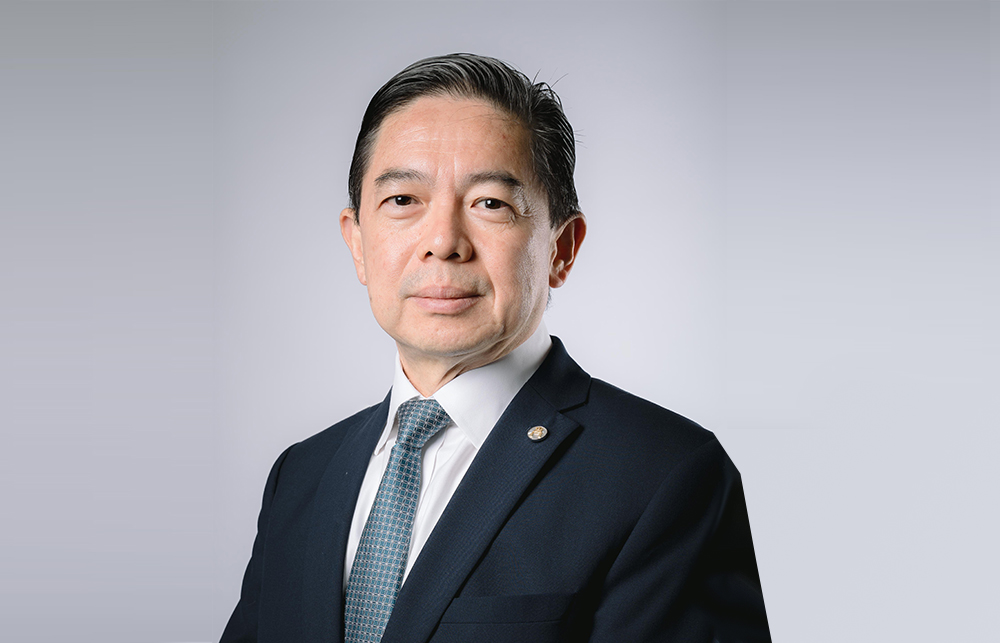
27 Nov Interview with H.E. Dato Seri Setia Dr. Awang Haji Mohd Amin Liew Abdullah, Minister at The Prime Minister’s Office, Minister of Finance and Economy II, Brunei
KT: What progress has Brunei made in diversifying its economy beyond oil and gas, and what challenges remain?
Minister: Brunei has been actively pursuing economic diversification over the past 10–15 years, and we are now seeing positive results. Our GDP, once dominated by the oil and gas sector, is now driven over 50% by non-oil and gas sectors. Ten years ago, non-oil exports represented just 10% of total exports; today they account for nearly 60%, approaching 70%. Unemployment has dropped sharply from 9% to 4.7% over the past eight years, and inflation has remained stable, averaging around 1% annually. Non-oil and gas sectors have grown steadily at 4.1–4.2% per year, reflecting the success of our diversification efforts.
We focus on five priority sectors – downstream oil and gas, tourism, ICT, services and food – while remaining open to proposals in other areas. Brunei offers investors a unique and efficient operating environment, and many international investors, including those from the Middle East, are now exploring opportunities here. Since then, we have also seen growth in food production and farming, particularly aquaculture, and have formed joint ventures with foreign investors in the marine, ICT and AI sectors. These areas have already made a significant impact on our economy, but our work is ongoing. There remains substantial potential to further develop our priority sectors and explore additional industries over time, which will continue to drive future economic growth.
KT: How is Brunei working to strengthen and modernize its banking and financial sector?
Minister: We ensure our financial sector remains modern and aligned with regional developments. We focus on deepening capital markets, especially Islamic finance, and encouraging financial institutions to offer innovative solutions. In 2017, we introduced FinTech regulatory sandbox guidelines, and we are advancing digital payment systems, which are set to launch soon. With the ASEAN Digital Economic Framework Agreement, we expect increased trade and investment, creating opportunities for financial institutions, including those from the Middle East, to support growing foreign direct investment in Brunei.
KT: What role does digital transformation play in Brunei’s economic strategy, and what impact is it already having?
Minister: The digital economy is inevitable in our region. Seven to eight years ago, we began upgrading network connectivity, and today over 90% of the population has 5G coverage, with nearly 99% on 4G. Our mobile download speeds have even ranked fifth globally at one point. Strong connectivity lays the foundation for digital payments and new applications. To support innovation, we established the Brunei Innovation Lab in 2021, where entrepreneurs can develop and test products – many already using AI in areas such as aquaculture.
We focus on providing the infrastructure and environment to help these innovations thrive. The government is adopting many digital solutions, including digital IDs. Our payment systems are now largely digitalized, and for trade, we use the ASEAN Single Window. Brunei’s own National Single Window is linked with other ASEAN countries, creating a seamless regional trade platform.
KT: How is Brunei integrating sustainability and green finance into its broader economic development plans?
We are committed to the Paris Agreement and our net-zero ambitions. Brunei’s banking sector is embracing ESG principles; for example, one of our largest Islamic banks has pledged up to $1.5 billion for green projects. Many investors are also taking initiative, promoting net-zero carbon projects and environmental responsibility alongside government efforts.
KT: How is Brunei working to deepen economic ties with the GCC, the broader Middle East and especially the UAE?
Minister: We maintain strong political and economic relationships with Middle Eastern countries. His Majesty has visited the UAE, Saudi Arabia, Bahrain and others, reflecting the depth of these ties. Our sovereign wealth fund has also invested in regional projects. We welcome investors from the Middle East to explore opportunities in Brunei. With shared culture and religion, we aim to make visits seamless. We have an open-door policy and work to facilitate projects, helping investors understand the environment and opportunities here.
Brunei is a politically stable, peaceful country, free from natural disasters. Investors can rely on continuous support from ministers and officials. While challenges may arise, often due to external factors, we work closely with businesses to resolve them and ensure a smooth and secure operating environment.
KT: What are your top priorities for Brunei’s economy over the next 10 to 20 years?
Minister: We will continue investing in our people, ensuring they have the skills to benefit from foreign investment opportunities. We also prioritize welfare, healthcare and environmental protection. At the same time, we are preparing for the future economy – focusing on AI, climate change and digitalization – to keep Brunei adaptable and competitive.
We aim to reduce unemployment further and enable our people to gain the experience needed to adapt to a changing economy. Jobs may evolve due to global trends, but investing in skills and education is essential. Under the wise leadership of His Majesty The Sultan and Yang Di-Pertuan of Negara Brunei Darussalam, we will continue advancing economic diversification while safeguarding social welfare.
No Comments